HARSHTIWARI

Harsh Tiwari

Software Engineer

BuildingSystemsThat ScaleBeyond Screens.

Building software at the intersection of systems, intelligence, and the physical world.

Scroll

Technology was never about code.It was about solving problems that matter.

My foundation in Electronics and Communication Engineering shaped how I see software not as layers of abstraction, but as systems with constraints, trade-offs, and real world consequences. From signal processing to distributed architectures, I learned that elegant engineering begins with understanding the problem domain deeply.

That perspective led me into systems development: building backends that handle load, embedded platforms that operate reliably at the edge, and full stack products where architecture decisions compound over time. I am drawn to the invisible work the queues, state machines, protocols, and observability that make complex systems feel simple.

Machine learning entered my practice as another systems layer: not magic, but pipelines, data quality, inference constraints, and deployment realities. Whether I am optimizing market data feeds or designing safety critical monitoring, the question is the same—how do we build something that remains correct under pressure?

I build because engineering is how I translate curiosity into impact. Every system I ship is an argument for clarity, restraint, and execution that respects the people who depend on it.

Selected Work

Systems engineered for real-world scale.

01

L1 Market Data Engine

Trading systems require reliable access to real-time market data with minimal latency. Raw exchange feeds are noisy, exchange-specific, and unsuitable for direct consumption by strategies.

Architecture

Exchange WebSocket feeds are ingested and normalized into a common schema. Market metrics such as spread, mid-price, VWAP, and trade velocity are computed in real time and distributed through a FastAPI WebSocket layer.

Challenges

  • Synchronizing trade and quote streams arriving independently
  • Maintaining low-latency calculations without blocking ingestion
  • Designing a reusable schema for future multi-exchange support

Outcome

Built a real-time Level-1 market data platform capable of ingesting, processing, and broadcasting live market information to downstream consumers.

PythonFastAPIWebSocketBinance APIDockerRich
View case study

02

Crypto Exchange

Retail and institutional users need a secure, performant exchange platform with transparent order books, reliable settlement, and auditable transaction history.

Architecture

Order matching engine runs in-memory with write-ahead logging. API gateway handles authentication and rate limiting. Wallet service manages hot/cold storage with multi-signature policies.

Challenges

  • Ensuring atomic order execution under concurrent trade requests
  • Designing idempotent APIs for financial operations
  • Balancing security hardening with low-latency trade execution

Outcome

Shipped a modular exchange architecture supporting spot trading, real-time market data, and secure wallet operations with comprehensive audit trails.

Node.jsPostgreSQLRedisReactWebSocketAWS
View case study

03

WebRTC Video Platform

Real-time video applications must handle NAT traversal, variable network conditions, and session lifecycle management while maintaining acceptable A/V quality.

Architecture

Signaling server coordinates ICE negotiation and room state. Selective Forwarding Unit (SFU) routes media streams for multi-party sessions. TURN servers provide relay fallback for restrictive networks.

Challenges

  • Optimizing bandwidth with simulcast and adaptive bitrate strategies
  • Managing room state consistency across distributed signaling nodes
  • Graceful degradation when peers disconnect unexpectedly

Outcome

Delivered a production-ready video platform supporting 1:1 and multi-party calls with resilient reconnect logic and quality monitoring.

WebRTCNode.jsSocket.ioReactDockerSTUN/TURN
View case study

04

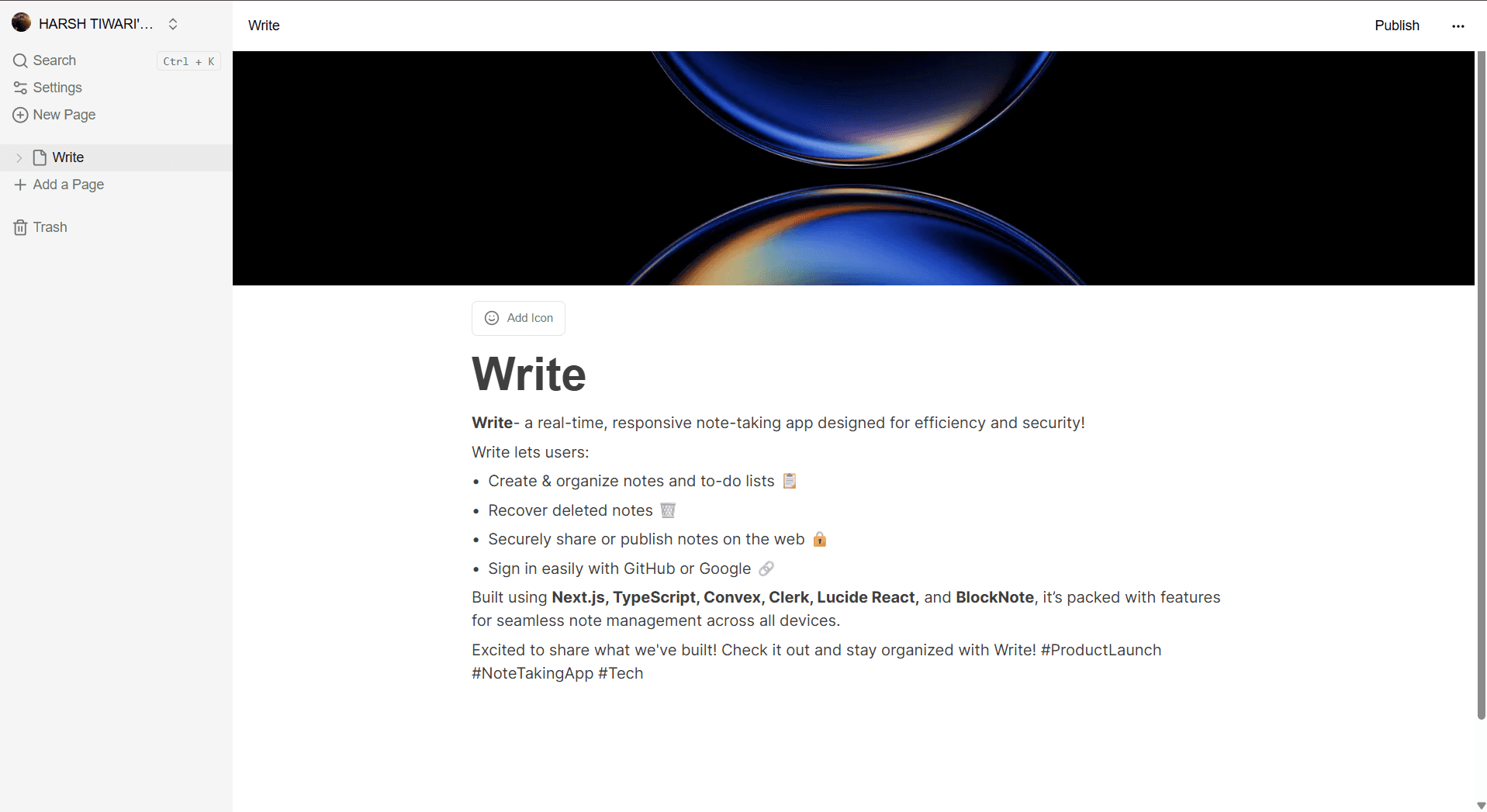
Write

Traditional note-taking tools often lack real-time synchronization, intuitive publishing workflows, and a unified experience across devices.

Architecture

Built using Next.js, Convex, and Clerk. Real-time synchronization, authentication, rich-text editing, note recovery, and secure publishing workflows are integrated into a single platform.

Challenges

  • Building real-time synchronization across clients
  • Managing editor state efficiently
  • Implementing secure sharing and publishing
  • Maintaining responsiveness across devices

Outcome

Delivered a production-ready productivity platform with real-time collaboration, publishing capabilities, and seamless note management.

Next.jsTypeScriptConvexClerkTailwindCSSBlockNote
View case study

05

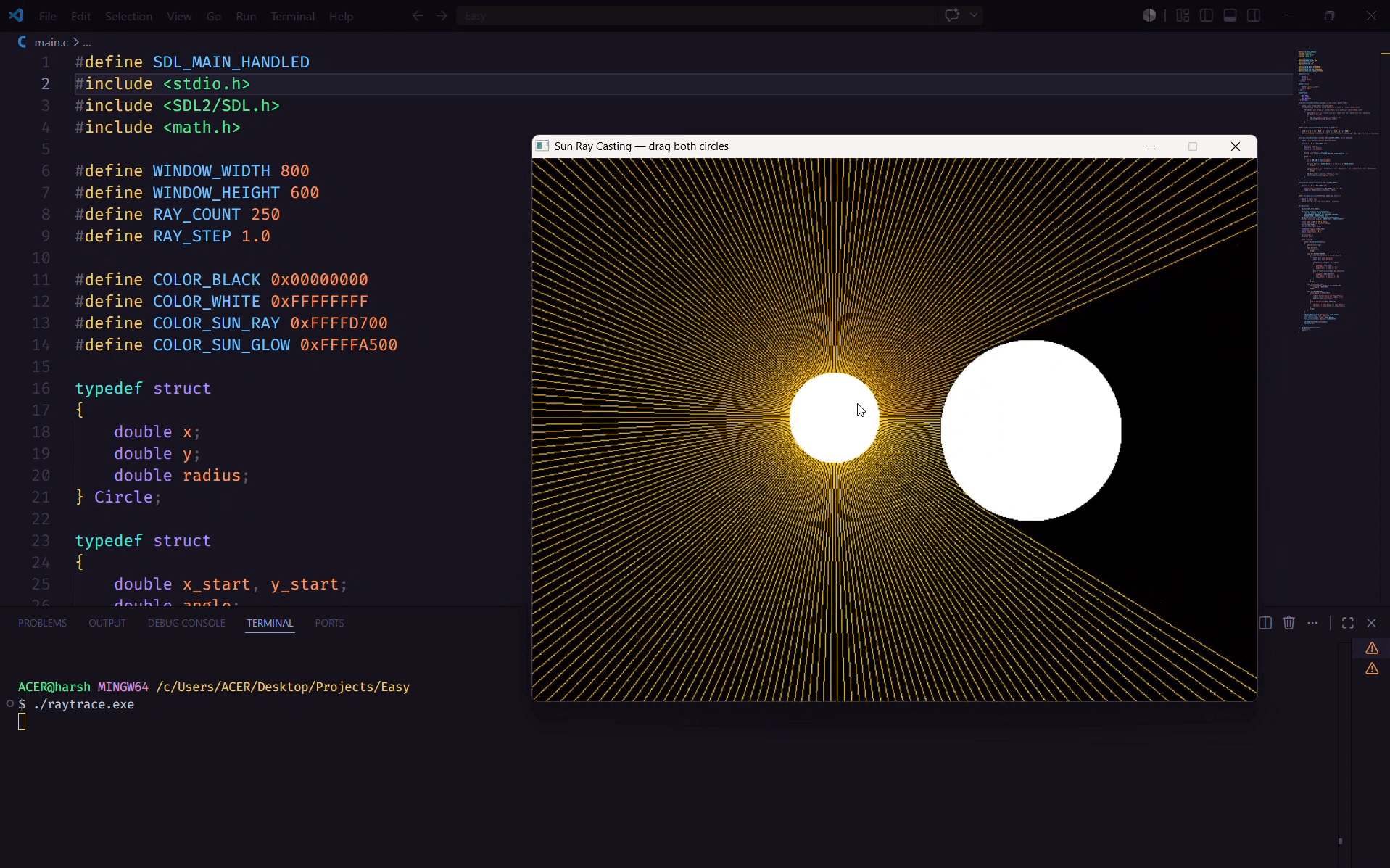
Interactive Sun Ray Casting Simulation

Ray casting algorithms are fundamental to graphics and game engines but are difficult to understand without visual and interactive demonstrations.

Architecture

Built in C using SDL2. Rays are emitted from a movable light source and dynamically intersect with scene geometry to generate real-time shadows.

Challenges

  • Efficient collision detection
  • Maintaining real-time frame rates
  • Accurate geometric intersection calculations
  • Interactive object manipulation

Outcome

Created an educational graphics system that visualizes visibility algorithms and light propagation in real time.

CSDL2Computer GraphicsGeometryRendering
View case study

Engineering Principles

Building systems that scale, communicate, and perform under real-world constraints.

Architecture Flow

Exchange Feed
      ↓
Ingestion Layer
      ↓
Processing Engine
      ↓
Live Distribution

Engineering Process

  1. 1.Measure critical paths
  2. 2.Minimize unnecessary allocations
  3. 3.Design for predictable latency
  4. 4.Monitor continuously

Snippet

// Market spread calculation


const spread = bestAsk - bestBid;

const mid =
(bestBid + bestAsk) / 2;

Professional Journey

From engineering fundamentals to building modern software systems.

A journey shaped by engineering discipline, systems thinking, and a passion for building reliable technology across software and infrastructure.

2021 · Education

Beginning the Engineering Journey

Started pursuing a Bachelor's degree in Electronics and Communication Engineering, building strong foundations in computing, communication systems, and engineering principles.

2022 · Foundation

Building Through Practice

Applied engineering concepts through hands-on projects, developing practical experience across software development, embedded systems, and system-level design.

2023 · Engineering

Expanding into Software Systems

Focused on modern application development, backend engineering, and scalable software architecture while strengthening problem-solving and design skills.

2024 · Systems

Real-Time Platforms & Infrastructure

Worked on performance-oriented systems, communication platforms, and distributed architectures with an emphasis on reliability, scalability, and observability.

2025 · Career

Associate Engineer at L&T Technology Services

Graduated with a Bachelor's degree in Electronics and Communication Engineering and began a professional engineering career at L&T Technology Services.

Engineering Philosophy

I enjoy building systemswhere reliability matters,performance is measurable,and complexity remains invisible.

My approach to engineering is grounded in simplicity, clarity, and long-term maintainability. Whether working on distributed services, real-time applications, or modern software platforms, I focus on creating solutions that remain dependable, scalable, and intuitive as they grow.

Numbers

0+

DSA Problems

0+

Projects

0+

Major Systems

0+

Years Building

Contact

Interested in buildingsomething ambitious?

Whether it's software engineering, distributed systems, real-time platforms, or ambitious ideas worth pursuing, I'm always open to meaningful conversations and opportunities to build technology that creates impact.

© 2026 Harsh Tiwari

Designed & engineered with intent.